By Chef Raphael Gamon | TCMChef.com
Published: July 20, 2026
TCMchef Raphael, private chef, health consultant, and founder of the world’s first TCM-French fusion restaurant
This article is editorial in nature. Food choices support but do not replace diagnosis, treatment, or the guidance of a qualified medical professional. Always consult your physician regarding specific health conditions and treatment plans.
There is a question that has been sitting with me for some time, one that practitioners of Traditional Chinese Medicine have understood intuitively for centuries but that modern food science is only now beginning to quantify: when we remove a plant from the conditions under which it evolved, do we remove its medicine as well?
The question is worth asking carefully, because the stakes are significant: Are we fooling ourselves? We are now producing enormous volumes of food under glass, under artificial light, in nutrient-solution baths, and through genetic modification. We are told it is more efficient, more consistent, more scalable. What we are rarely told is what the peer-reviewed literature increasingly suggests: That the healing compounds, enzymes, phytonutrients, and bioavailable micronutrients that give food its medicinal character are not simply a function of a plant’s genetic code. They are a function of its relationship with the world around it.
The Blueprint Is Not the Building
Animal cloning offers a useful parallel here. Cloned animals carry the original genetic sequence of their source organism. The blueprint is intact. Yet repeated studies have documented epigenetic abnormalities, shortened telomeres, immune dysregulation, and reduced vitality in cloned animals across multiple species. The information is there, but the expression of that information is compromised. The environment shapes the gene, not just the other way around.
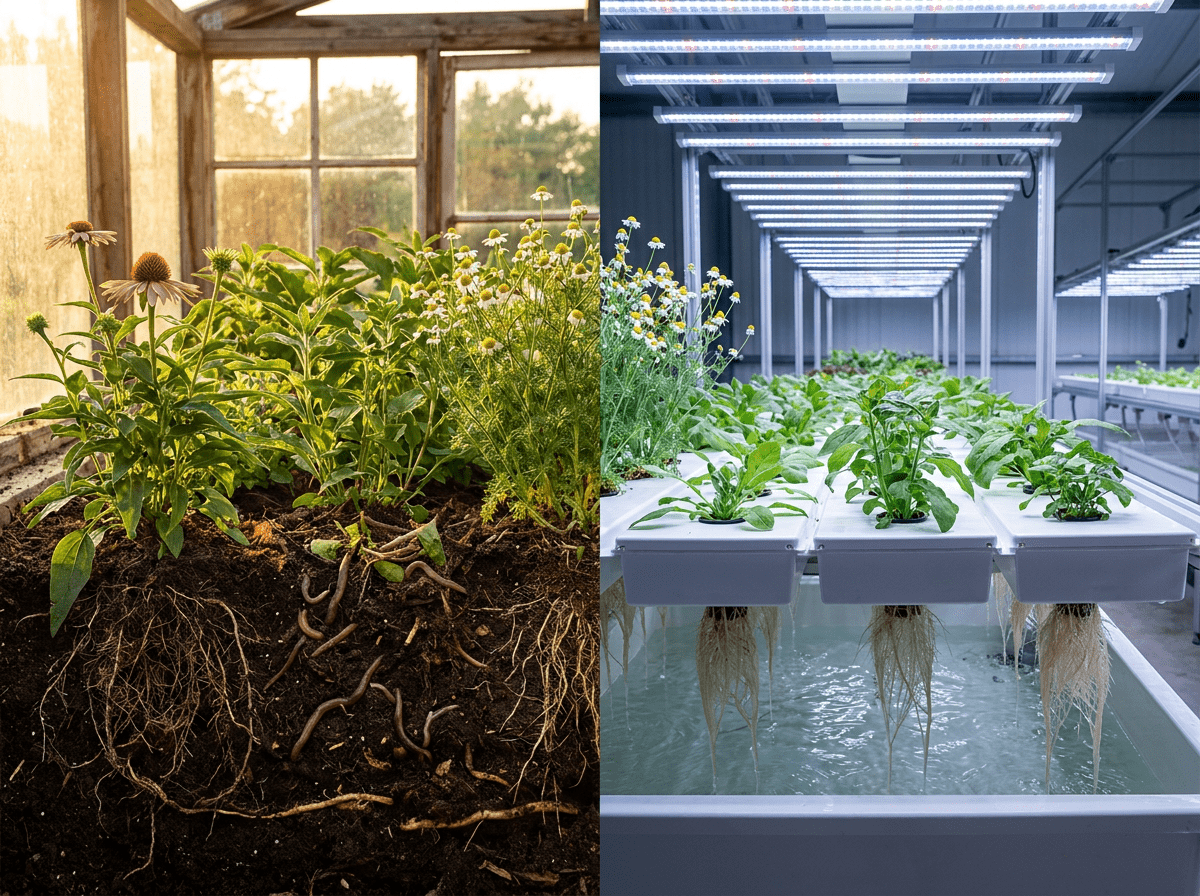
Plants grown under artificial conditions face a structurally similar problem. The genetic code of a hydroponically cultivated basil plant may be identical to one grown in a sun-drenched Ligurian hillside. But a growing body of research indicates that the secondary metabolites produced by that plant, the very compounds responsible for its antioxidant, anti-inflammatory, and neuroprotective properties, are substantially shaped by environmental stressors that artificial systems do not and cannot replicate.
What the Science Actually Says
Phytonutrients, including polyphenols, flavonoids, glucosinolates, and carotenoids, are not nutritional accidents. They are produced as adaptive responses. A plant exposed to UV radiation synthesizes more flavonoids to protect itself. A plant stressed by wind, soil competition, or temperature fluctuation upregulates its antioxidant pathways. A plant interacting with the complex microbial ecosystem of living soil generates entirely different biochemical profiles than one growing in a sterile solution of measured salts and water.
A 2019 meta-analysis published in the British Journal of Nutrition found that organically grown crops, which tend to experience more environmental stress and less synthetic fertility management, contained significantly higher concentrations of polyphenols and antioxidants than their conventionally farmed counterparts. While that study focused on organic versus conventional, the underlying mechanism, stress-induced biosynthesis of secondary metabolites, applies directly to the hydroponics question.
Research comparing hydroponic and soil-grown lettuce, tomatoes, and herbs has shown mixed results for basic macronutrients, but consistently shows reduced concentrations of phenolic compounds and flavonoids in hydroponic produce. A 2020 study in the journal Scientia Horticulturae found that hydroponic basil produced measurably lower levels of rosmarinic acid, a key anti-inflammatory compound in the herb, compared with soil-grown basil under otherwise identical conditions.
Bioavailability is a separate but equally important variable. The mineral content of food is not simply about what is present in the tissue but about the form in which it is present. Plants grown in living soil form symbiotic relationships with mycorrhizal fungi and soil bacteria that facilitate the uptake of minerals in chelated, organically bound forms that are more readily absorbed by the human gut. A plant fed a precise ratio of dissolved minerals in a hydroponic solution may contain the same quantity of magnesium as a soil-grown plant but in a form that behaves differently once it enters the digestive system.
The GMO Question
Genetically modified organisms introduce a further dimension. The most widely deployed GMO crops, Roundup-Ready soybeans, herbicide-tolerant corn, Bt cotton and corn, are engineered primarily for agronomic utility, not nutritional or medicinal optimization. Read my blog from a few years ago… The modifications are designed to make the plant resistant to pesticide application or to produce its own insecticidal proteins. They are not designed to enhance polyphenol synthesis, increase bioavailable mineral content, or preserve the phytonutrient complexity that makes food medicinal.
What is more, the broad-spectrum herbicide use that typically accompanies Roundup-Ready crops has been documented to affect soil microbiome diversity, which in turn affects the nutritional ecology of everything grown in that soil. Glyphosate has been shown to act as an antibiotic against soil bacteria, particularly those involved in mineral chelation and nitrogen fixation. When the soil microbial community is disrupted, the nutritional and medicinal intelligence of the food grown in it is disrupted in ways that are difficult to measure on a standard nutritional label.
From the perspective of Traditional Chinese Medicine, this is not surprising. TCM plant wisdom has always understood medicinal herbs as living entities in relationship with their environment. The concept of di dao cai, which translates roughly as “authentic regional material,” refers specifically to medicinal herbs grown in their native ecological context. The same herb cultivated outside its native region, even under nominally identical conditions, was historically considered inferior. This was not superstition. It was pattern recognition developed over millennia of clinical observation.
The Brain-Gut Connection
This matters directly to the gut-brain axis, which is where food and cognition intersect in ways that nutritional science has only recently begun to take seriously.
The gut microbiome is shaped, fed, and modulated by the food we consume. Polyphenols from plant foods act as prebiotics, selectively feeding beneficial bacterial strains that produce short-chain fatty acids, synthesize neurotransmitter precursors, and regulate the immune-inflammatory balance that directly affects brain function, mood, and cognitive clarity. The research linking polyphenol-rich diets to reduced rates of depression, cognitive decline, and neuroinflammation is now substantial and consistent across multiple population studies.
If artificially grown and GMO-sourced produce contains meaningfully lower concentrations of these compounds, then the downstream effects on the gut microbiome, and by extension on mental and neurological health, are not trivial. We are not talking about minor variations in nutritional labels. We are talking about a potential gap between food that maintains its relationship with the restorative pathway and food that only resembles it.
The Organic Label and What It No Longer Means
Walk into almost any supermarket or health food store today, and you will find perfectly formed lettuce, impeccably shaped microgreens, and salad leaves sold under organic labeling or premium positioning. What the packaging rarely tells you is that a significant and growing proportion of that produce never touched soil, never experienced a variable climate, and was never subjected to the environmental stressors that cause a plant to develop its deepest nutritional complexity.
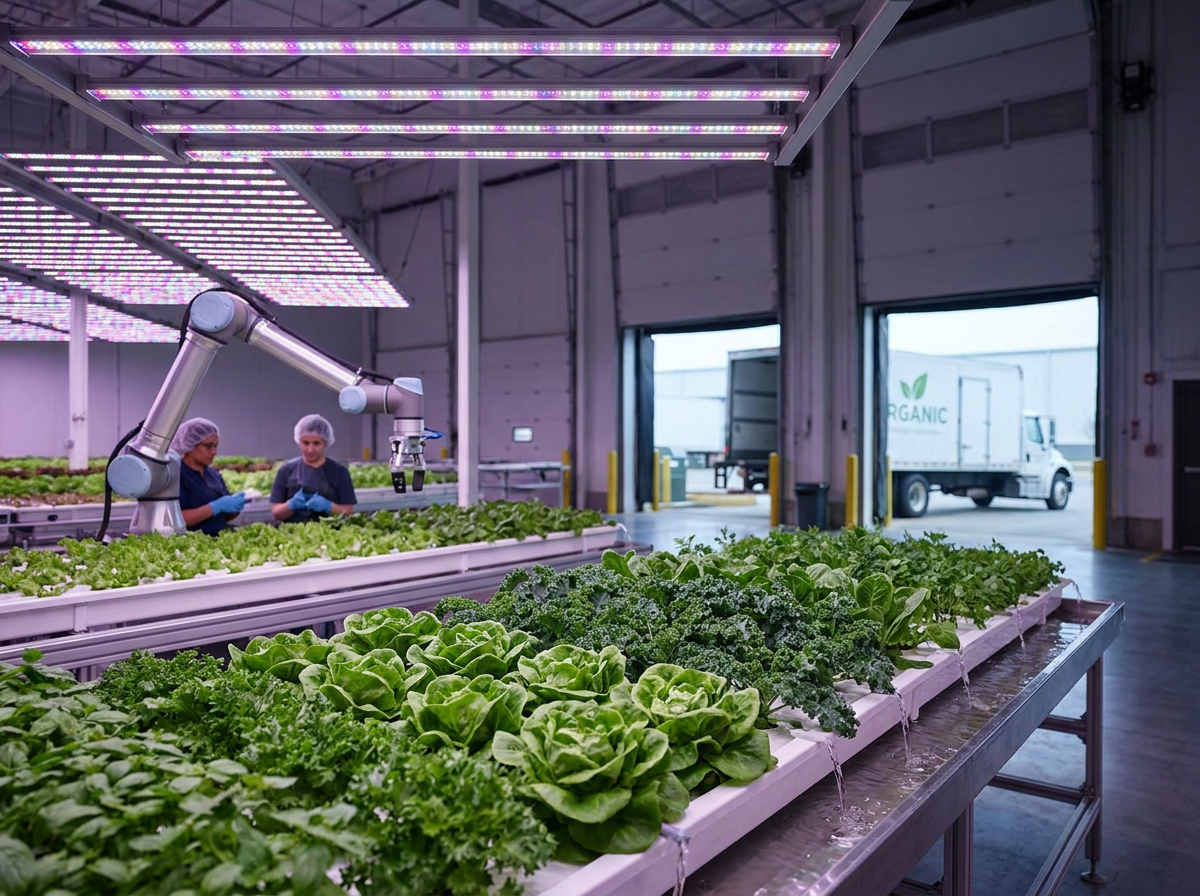
There is a further complication that the packaging will not disclose: Hydroponic produce can be, and frequently is, certified organic in the United States. This is one of the most actively contested disputes in American agriculture today. The organic certification, as most people understand it, is built on a foundational principle: the health of the soil. Organic farming, in its traditional definition, means cultivating living soil, reducing synthetic chemical fertilizers, building microbial diversity beneath the surface, and working within a biological system that the plant grows from and returns to. Hydroponics replaces all of that with water and liquid nutrient solution. There is no soil. There is no microbial ecosystem. There is no biological relationship between the plant and the ground it was never planted in.
Many traditional farmers and organic advocates argue that certifying hydroponic operations as organic directly contradicts the regulatory principles the certification was designed to protect. The National Organic Standards Board, the body that advises the U.S. Department of Agriculture on organic rules, has voted more than once to prohibit hydroponic operations from receiving organic certification, and has been overruled each time. As it stands today, a head of lettuce grown in a warehouse under artificial light in a water bath can legally carry the same USDA Organic seal as a head grown in living, composted, microbiologically rich field soil. The label tells you nothing about which one you are holding.
This matters because the word organic, at its origin, was not a marketing category. It was a description of a relationship between a plant and its living environment. When that relationship is absent, something is missing. That absence has measurable consequences for nutritional quality.
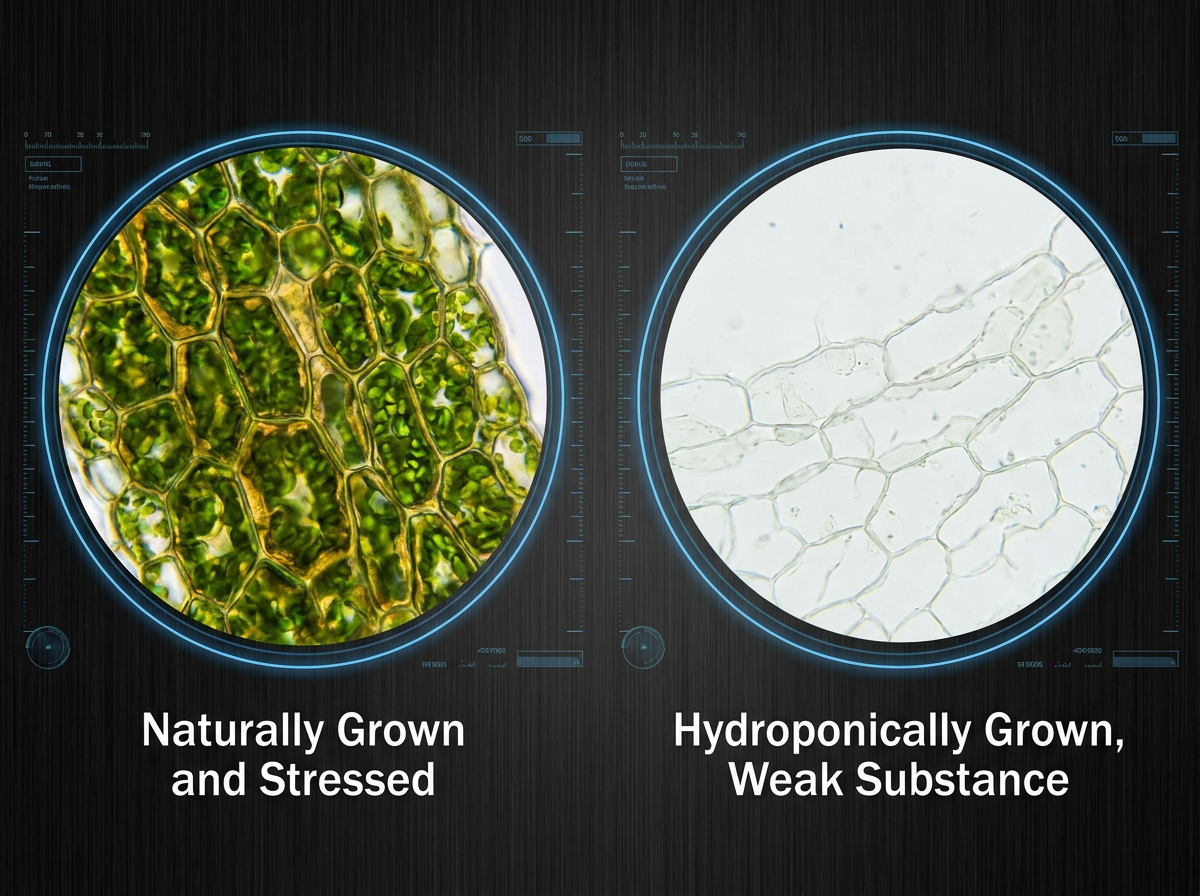
The difference is measurable at the cellular level. The structure of naturally field-grown, environmentally stressed produce shows denser, more complex tissue architecture, with tightly packed cells, active enzyme markers, and antioxidant depth the body can actually use. Commercially hydroponic produce, grown in controlled warmth with optimized water nutrition and artificial light, frequently shows thinner cell walls, reduced chloroplast density, and lower measurable enzyme activity per gram of edible matter. It may look identical on your plate. It is not identical in your body.
A Chef’s Perspective
I was trained in classical French culinary tradition and in the plant medicine system of Traditional Food Medicine. Both traditions share a foundational assumption: that food is not merely fuel. It is a relationship. It is the accumulated wisdom of a plant’s engagement with its specific corner of the natural world, delivered to the body in a form the body was designed to receive.
When I select ingredients, I am asking a question about the integrity of that relationship. I want to know where the plant grew, what kind of soil it grew in, how long it was exposed to sunlight and weather, and whether it was supported or isolated by its growing environment. These are not romantic preferences. They are functional considerations with measurable consequences for what the food does inside the body.
This does not mean that all hydroponic produce is without value or that every GMO crop is harmful. The science is nuanced. Some hydroponic systems, particularly those that incorporate organic substrates, living bacterial cultures, and UV exposure, yield results much closer to those of soil cultivation than sterile salt-solution systems. And some GMO applications, particularly in non-commodity crops and in developing-world food security contexts, deserve serious consideration on their own terms.
But the default assumption that artificial growing conditions preserve the medicinal character of food is not supported by the evidence. It is an assumption of convenience, and it deserves to be challenged.
Why This Matters for Your Health
When I speak about food as medicine and Medicine food therapy, I always prioritize the quality of the raw material before preparation methods, timing, or supplementation. Your food choices, made deliberately and with the right guidance, will benefit modern medicine. They do not replace it. They support it. A well-nourished body responds better to treatment, recovers more efficiently from procedure, and sustains the resilience that medical intervention alone cannot build.
There is also a problem that rarely gets named directly: people navigating a health challenge are overwhelmed. The volume of health content available on social media today is enormous. Almost none of it is personalized. When you are confronted with that overwhelming volume of information and none of it quite applies to your situation, that is not a failure of your attention. That is a structural limitation of content that was never designed specifically for you.
A Personal Note
If you are navigating a health challenge and find yourself confronted with overwhelming social media information that never includes the personalized treatment your situation actually requires, reaching out to someone like myself is an option worth considering. Having a guide through a difficult experience, someone who understands how to align your food choices with your medical treatment plan, support the work your doctors are doing, and build the nutritional foundation your recovery depends on, will positively enhance your outcome. Not as a replacement for your medical team. As a complement to it.
This is the work I do. Personalized, evidence-informed, and built around who you are: your biology, your diagnosis, your treatment plan, and your kitchen.
Contact: raphael@TCMchef.com | 424.288.6819 | tcmchef.com
The information in this article reflects the author’s professional culinary and nutritional perspective. It does not constitute medical advice and is not a substitute for the diagnosis or treatment provided by a qualified medical professional. Individual dietary needs vary significantly. Always consult your physician or registered dietitian before making changes to your diet in the context of a medical condition or treatment plan.
TCMchef Raphael | raphael@TCMchef.com | 424.288.6819 | tcmchef.com
.